SASA Setton expands its work and reaches out into the community beyond the hospitals
Building a World" Literacy Program"

No items yet!
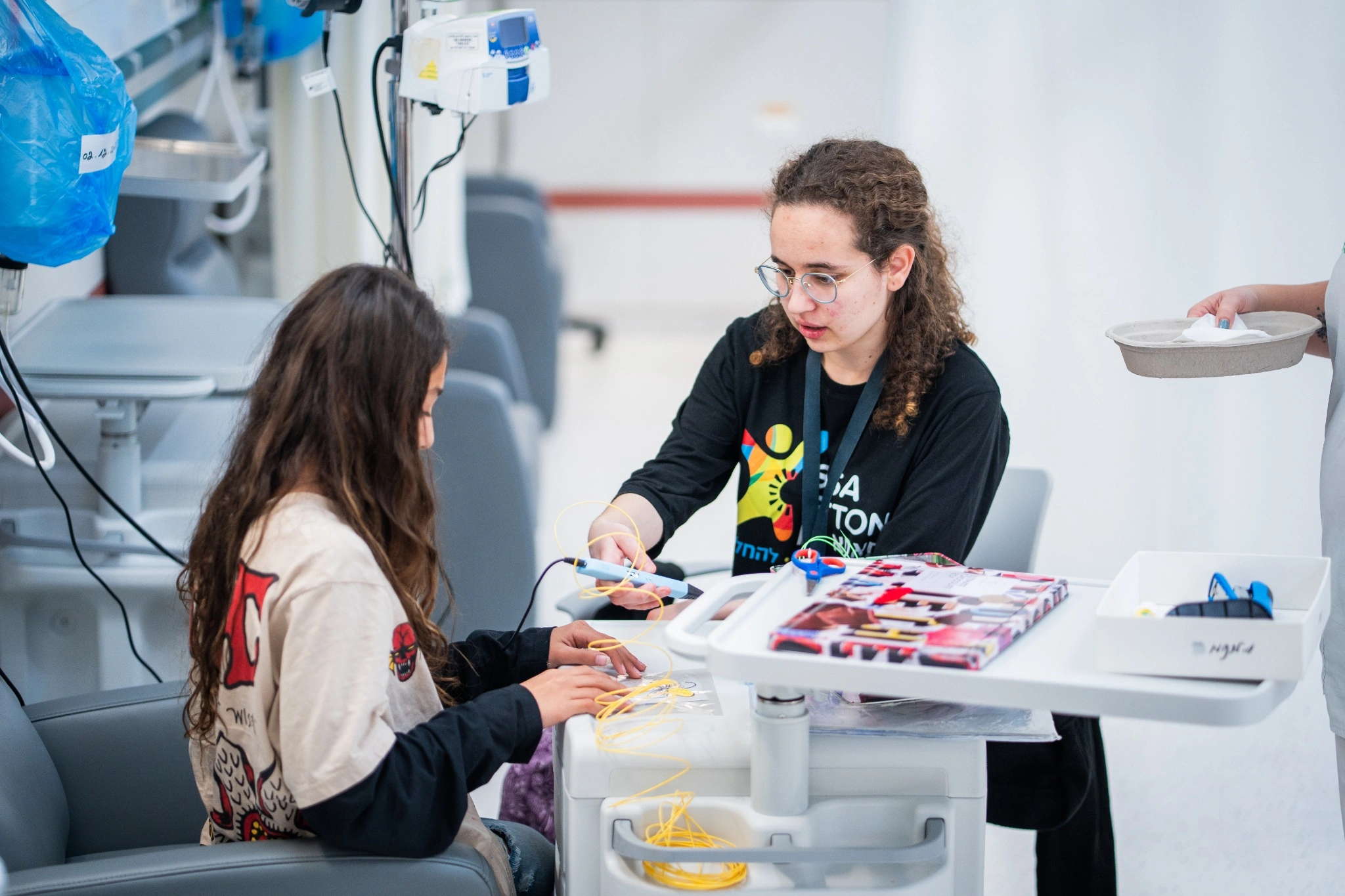
Hospitalized children face not only a complex medical condition, but also disconnection from their daily routine and experiences of uncertainty and anxiety. The educational space in the hospital serves as an anchor of stability for them, and we see the education teams on the ground as the greatest experts on these children's needs.
The "Boost of Encouragement" program was created to identify needs arising from the field and enable teams to develop and lead innovative pedagogical initiatives that promote the healing process, strengthen children's sense of capability, and support continuity in their academic and social life.
To turn vision into reality, we provide a broad support framework that includes professional mentoring by experts throughout the development process, from shaping the idea to implementing it in the education centers.
The program includes substantial implementation grants of tens of thousands of shekels per initiative, group and individual learning sessions, and professional development credit. By combining digital tools, creativity and human sensitivity, we strengthen collaboration between education and medical teams and ensure the development of relevant, sustainable solutions.
The "Boost of Encouragement" program is designed to empower hospital education teams and enable them to develop and lead groundbreaking pedagogical initiatives born out of the real needs of the complex hospital environment. The organization provides the teams, who are considered the greatest experts on children's needs, with close professional mentoring, substantial implementation grants of tens of thousands of shekels per initiative, and professional development credit. The program's overarching goal is to turn pedagogical ideas into sustainable solutions that promote the healing process, strengthen children's resilience and sense of capability, and ensure continuity in their academic and social life.

In the program's first cohort (2024–2025), a variety of initiatives were developed to address medical and emotional situations: at Barzilai Medical Center, games were developed to help children cope with medical procedures; at Emek Medical Center, an experiential preparation workshop for colonoscopy was established; and at Sheba, virtual reality (VR) was introduced to reduce anxiety before surgery. In the field of mental health and rehabilitation, the therapeutic coffee cart "Café Alma" was established in Ness Ziona as a vocational training center, and at the Maor School, tangible tools for emotional regulation were developed for adolescents hospitalized in an acute psychiatric ward. These initiatives combine creativity and technology to create positive experiences and a coping toolkit for the children.
In the second cohort (2025–2026), additional initiatives were selected that expand emotional and community support, including a "Mobile Clinic for Stuffed Animals" at Kaplan to help young children process the hospitalization experience, and the emotional journey journal "A Window to the Heart" at Soroka. The "Brave Connection" project worked to strengthen the bond between the mental health setting and the community and reduce stigma; the "Scents of Light" initiative at Asif fostered a sense of meaning through an entrepreneurial soap-making process; and in Nazareth, a culturally accessible educational-emotional escape room was created. Each of these projects is a true "boost of encouragement," creating a "normal" daily routine and a space of hope for children and their families that strengthens personal resilience and supports the healing process.